Swedish Work Permit vs EU Blue Card
The Quip: Not enough people know about the EU Blue Card as an option, and it's a better option than the work permit for some situations. Don't let your company's immigration attorneys default to the work permit. Make an informed, explicit decision about it.
You're a high skilled, non-EU worker with an employment contract. You have two options for how to immigrate to Sweden, provided you meet a salary threshold. The options are very similar so this is a very common point of confusion.
Swedish Work Permit
This is the default that your employer or an immigration attorney will pursue. A lot of employers may not even know about the Blue Card option. Your contract needs to meet certain conditions (insurance, union assessment), but most importantly your contract need to exceed the maintenance requirement, currently as of April 2026 29,680 SEK / month. (Note this will increase soon on June 1, 2026 to 33,390 SEK / month should not impact high skilled workers given you should easily clear it anyway.)
Your family can also come, provided you meet a separate maintenance requirement based on the size of your family. (That page is for family "who apply afterwards" but it's the same if you're applying at the same time.)
EU Blue Card
For the EU Blue Card, you basically need to meet the same requirements as getting a work permit, but you need to demonstrate your qualifications (higher education degree or 5+ years relevant professional experience) and most critically, have a salary of at least 52,000 SEK / month.
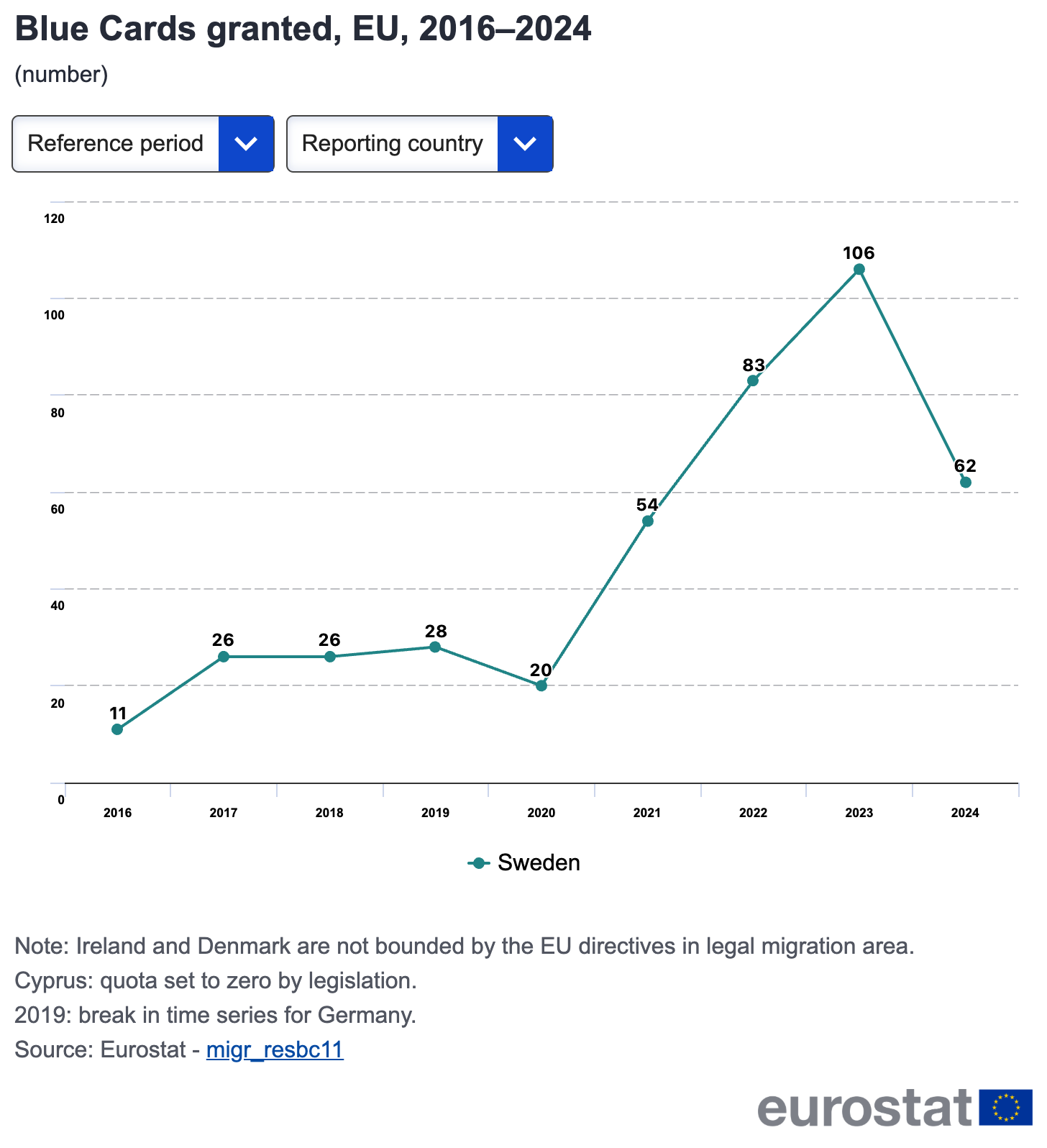
Very few EU Blue cards get issued – 62 in all of 2024. Compare this with almost 3000 a month. This is likely a combination of the salary threshold and the work-permit-default I talked about above.
Similarities between Sweden's Work Permit and the EU Blue Card
- Both routes offer the same time to decision
- Both have basically the same requirements for your contract
- Both have the same requirements for your family
- Both have the same path to permanent residency (4 years of residency)
Differences between Sweden's Work Permit and the EU Blue Card
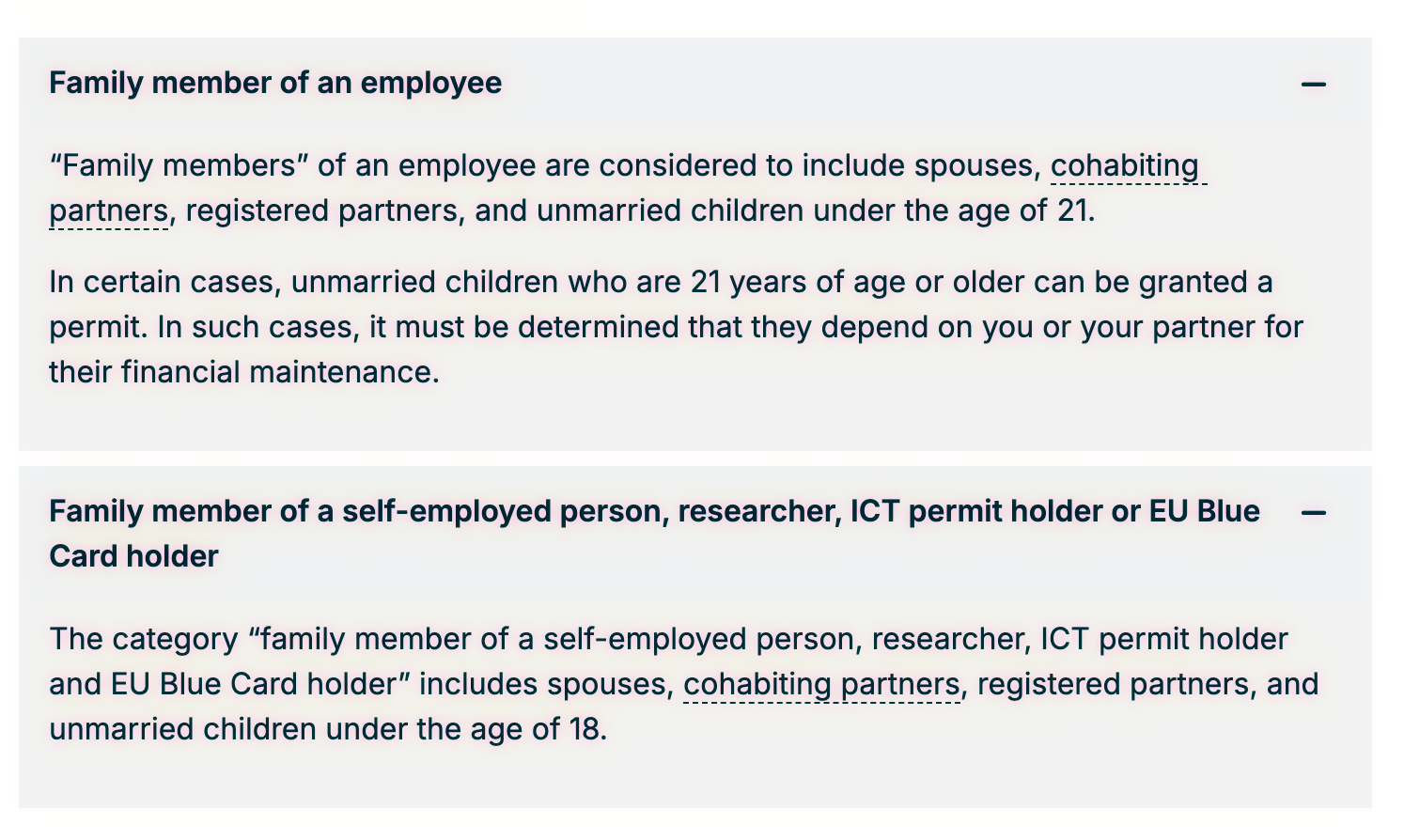
Family: The most practical difference for those looking to stay in Sweden with family is that the work permit allows you to bring children under the age of 21. For the blue card, only children up to age 18 qualify.
Duration: Beginning June 1, 2026, the Blue Card can be given for 4 years instead of the work permit's 2. This could save you some stress by reducing renewals but could affect your permanent residency timeline; see below. If you do get it for this reason, make sure your passport expires in 4+ years otherwise you'll only get a permit up to the expiration date.
EU Long Term Residency (EULTR): The work permit is a Swedish program. The EU Blue Card is a EU-wide program (though Denmark and Ireland do not implement it) and makes it easier to move to a different EU country, but the benefits depend on what your target country is. In Germany, for example, you can get permanent residency in 27 or even 21 months after living there with a Blue Card. Additionally, you can take another path towards permanent residency by pursuing EULTR, which allows you to get the equivalent permanent residency status in your host country after five years living in the EU, including previous time on a blue card in a different EU country. On a normal Swedish work permit, your time towards EULTR would reset if you were to move to a different EU country.
So which to pick?
If you are 1) moving to Sweden for the first time 2) have a permanent contract (no probationary period) 3) want to get Swedish permanent residency after 48 months 4) and are applying after June 1, 2026, get the Blue Card. You should get a four year permit and thus don't need to do any renewals before applying for permanent residency when the Blue Card renews. (I say should since we don't know exactly what's going to happen yet since the date hasn't come 😄)
If you have a probationary period, get the work permit (see If you can, avoid a probationary period). Save the Blue Card, which you can apply for later, to better align your residency with the 48 month permanent residency threshold. Info on that is coming up in a future post! Subscribe to be notified.
If you don't plan to stay in Sweden but plan to move to a different EU country, get the Blue Card.